
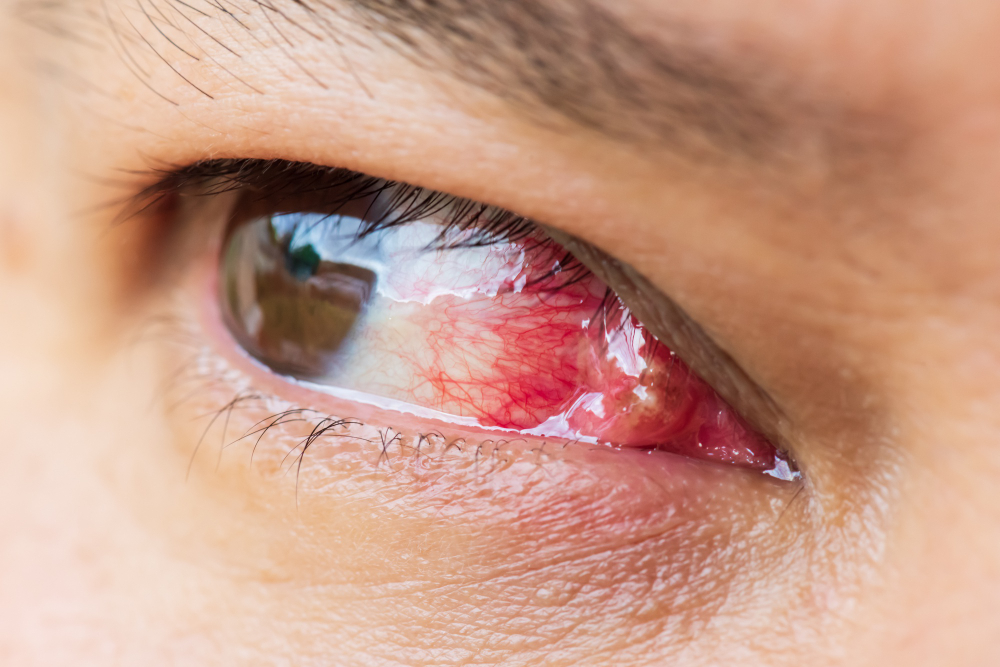
What is Pterygium?
Pterygium is a common eye condition. It appears as a pink, fleshy growth on the white part of the eye. Often, this growth starts on the side closest to the nose. Sometimes, it can spread toward the center of the eye. Pterygium is also called “surfer’s eye” because it is more common in people who spend a lot of time outdoors. While it is usually not cancerous, it can cause discomfort or vision problems if left untreated. Because pterygium can affect daily life, it is important to know its causes, symptoms, and treatment options.
Causes and Risk Factors
Pterygium develops when the eye is exposed to certain things over time. For example, sunlight, wind, and dust can all play a role. The main causes and risk factors include:
Because UV light is a major factor, people living near the equator or in sunny areas are at higher risk. Wearing sunglasses can help lower this risk.
Common Symptoms
Pterygium symptoms can vary. Some people may not notice any problems at first. However, as the growth gets bigger, symptoms may include:
Sometimes, the growth can change shape or size. If you notice any of these signs, it is important to see an eye doctor.
How Pterygium is Diagnosed
Doctors can usually diagnose pterygium with a simple eye exam. During the visit, the doctor will:
In some cases, the doctor may use a microscope to get a closer look. Rarely, extra tests are needed to rule out other eye problems. Early diagnosis helps prevent vision loss and guides the best treatment.
Treatment Options
Treatment for pterygium depends on how severe it is. For mild cases, doctors may suggest simple steps. However, if the growth is large or causes vision problems, more care is needed. Treatment options include:
After surgery, doctors may use special drops to prevent the growth from coming back. Most people recover well, but regular check-ups are important.
Prevention Tips
While not all cases can be prevented, there are ways to lower your risk. For example, you can:
Because prevention is easier than treatment, these steps can help protect your eyes.
Lifestyle and Eye Care Guidance
Good eye care habits can make a big difference. For example, you should:
With these simple steps, you can support your overall eye health and reduce the risk of pterygium returning.
Conclusion If you notice any symptoms of pterygium, consult an eye specialist at Jay Netra Kendra for personalized advice. Early care can protect your vision and keep your eyes healthy.